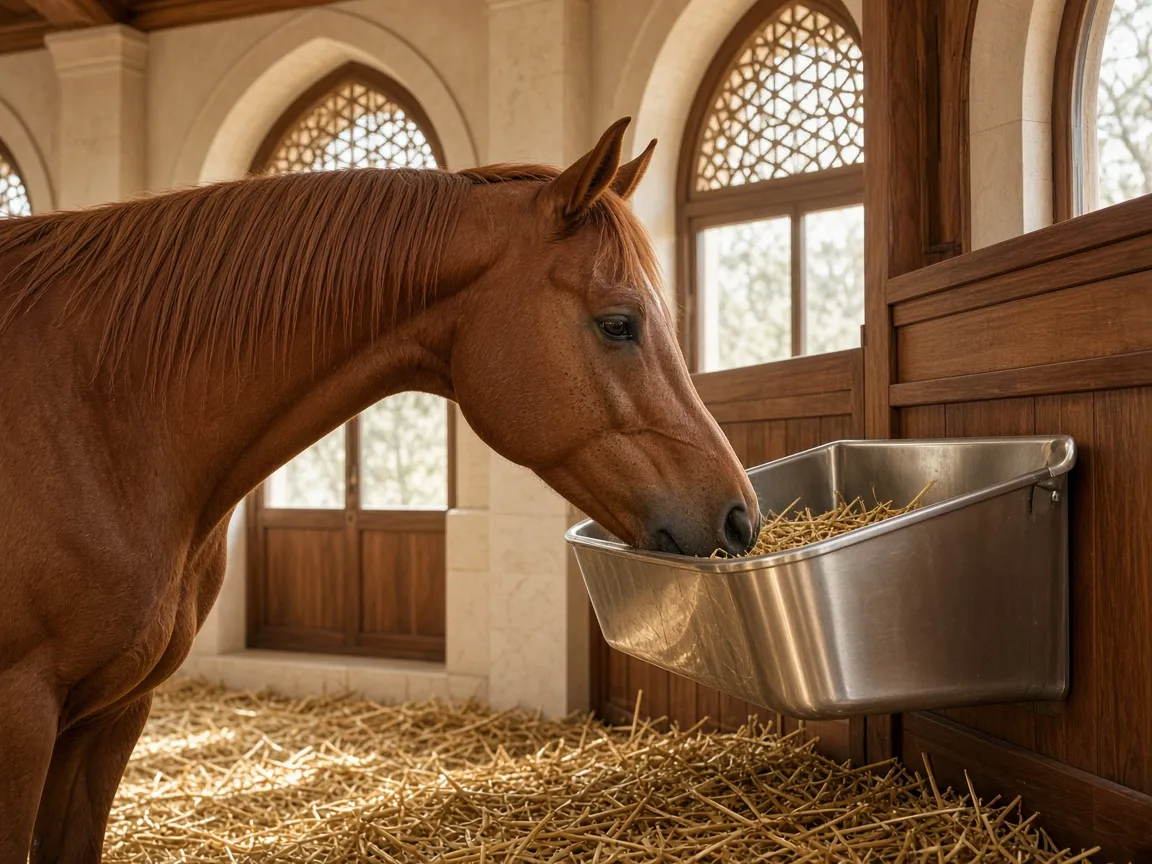
The horse evolved to graze for up to 16 hours a day, and its digestive system is designed to process a steady supply of fibre. Whatever the discipline, a healthy diet starts with forage — hard feed and supplements are there to fill the gaps.
How much forage does a horse need?
As a guide, horses should receive at least 1.5% of their bodyweight in forage dry matter each day — around 7.5 kg for a 500 kg horse. Horses in hard work, or those that need to gain weight, may need more.
Forage in the Gulf
Most hay in the region is imported, and quality can vary from one shipment to the next. Rhodes grass, timothy and alfalfa are common choices, each with a different nutritional profile:
- Grass hays (Rhodes, timothy) are lower in energy and protein and suit most horses as the main forage.
- Alfalfa is higher in protein and calcium and is valuable for working horses, breeding stock and horses prone to gastric discomfort.
Having hay analysed is the best way to understand exactly what it provides.
Balancing a forage-based diet
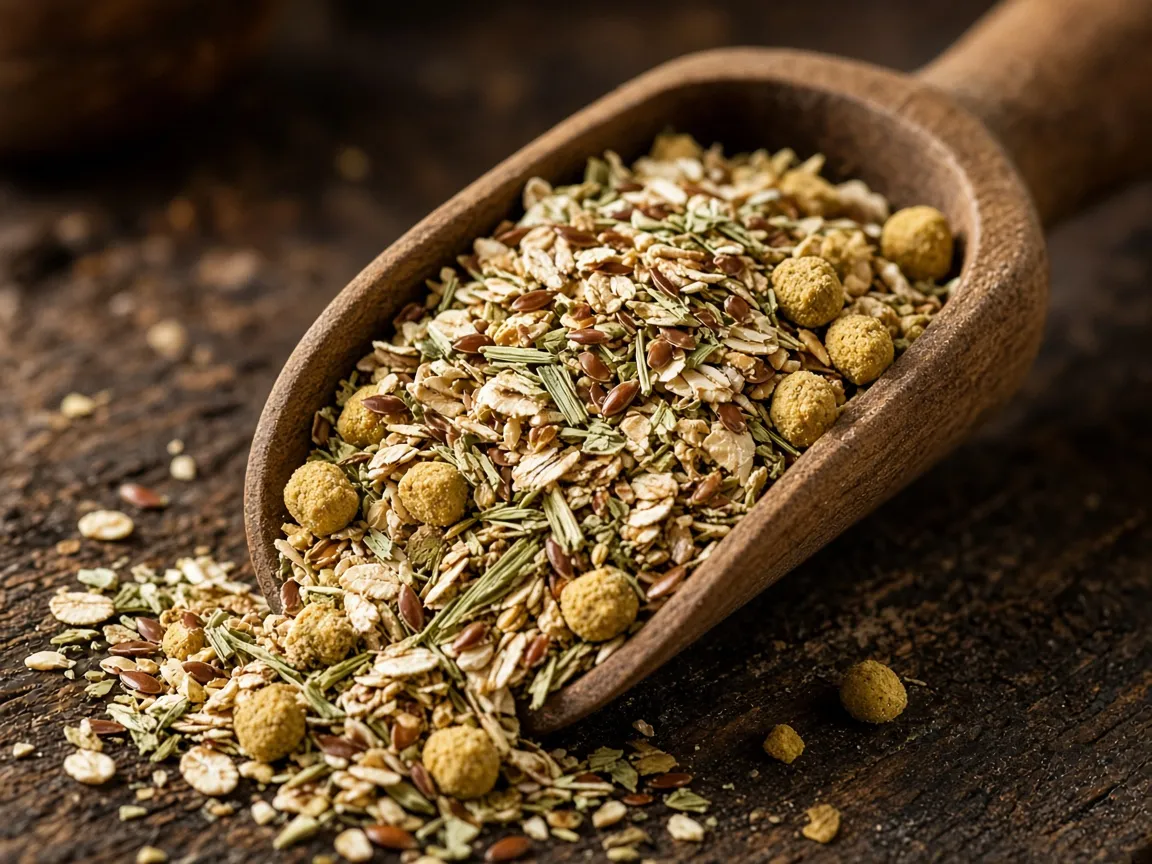
Even good hay rarely supplies every vitamin and trace mineral a horse needs. A low-calorie balancer such as ASIL Vital Balancer fills those gaps without adding unwanted energy, while ASIL Alfa Fibre can be added to each meal to increase chewing time and slow down fast eaters.
Key takeaways
- Feed forage little and often, and avoid long periods without fibre.
- Introduce any new forage gradually over one to two weeks.
- Store hay in a dry, shaded, well-ventilated area to protect quality.
Need help assessing your forage? Get in touch with our nutrition team.